
August feels like the heart of summer in Victoria — long evenings, dry heat, and the kind of clear skies that make Vancouver Island feel like the best place on earth. But for your lawn and garden, August is actually transition month. The season is starting to shift, and the decisions you make right now will determine how your property looks next spring.
At IslandEarth Landscape Company, August is one of our busiest months across Victoria, Saanich, Oak Bay, and Langford. Property owners who get these tasks done before September arrives consistently have healthier, better-looking landscapes through fall and into the following year. Here are the seven things that matter most right now.
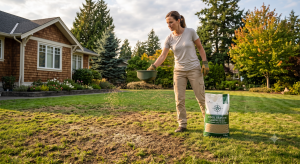
1. Overseed Thin and Bare Lawn Areas Now — Not in Spring
Most people think of overseeding as a spring job. In Victoria’s Zone 9b climate, late August to mid-September is actually the superior window — and most turf professionals would rather overseed in August than in April.
Mid-August through mid-September is the best time to renovate a thin lawn. Cool-season grass seeds germinate quickly in the warm soils of late summer, and once the grass germinates, the warm days and cool nights of fall promote rapid turf growth. There is also less competition from weeds, as few weed seeds germinate in late summer and fall.
In practical terms, this means seed planted now will be established and actively growing before the first fall rains arrive in October, giving it a strong root system heading into winter. Seed planted in spring competes with a full flush of weed germination at the same time.
For Victoria properties, a cool-season blend containing perennial ryegrass and fine fescue performs well in our local conditions. Before overseeding, mow the existing lawn short and rake out any thatch that has accumulated through summer.
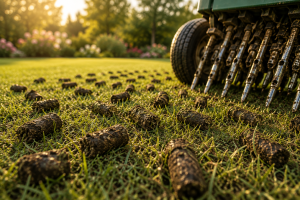
2. Aerate Before You Overseed
Aeration and overseeding work together. Core aeration relieves compaction and improves seed-to-soil contact, which is one of the most critical factors in successful overseeding. Without it, seed sits on top of a hard, dry surface and struggles to establish.
Late summer aeration is often better than spring because it avoids surfacing dormant weed seeds at the worst time. In spring, aerating churns up weed seeds that then germinate in competition with your grass. In late summer, weed pressure is much lower.
Victoria’s clay soils compact readily through a long dry summer of foot traffic, mowing, and general use. A core aerator removes small plugs of soil and opens channels for water, air, and nutrients to reach root depth. Most properties benefit from aeration once a year, and August into September is the ideal window for cool-season lawns across Greater Victoria.
After aerating, leave the plugs on the surface. They break down naturally within a couple of weeks and return organic matter to the soil. Then overseed directly into the aerated surface for the best seed-to-soil contact possible.
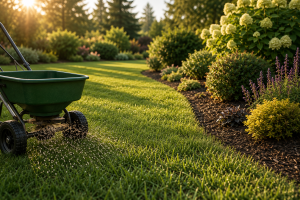
3. Apply a Late Summer Fertilizer — But Choose the Right One
August is the last effective window to fertilize before grass growth slows significantly in fall. Cool-season grasses appreciate an extra boost of nitrogen during this period, giving them extra support while bouncing back from summer heat and helping them build strength heading into the cooler months.
The important detail is product choice. A slow-release fertilizer with moderate nitrogen and higher potassium is the right call for late summer, not a high-nitrogen quick-release product. High nitrogen in late summer pushes rapid, soft top growth that is vulnerable to disease and does not prepare the lawn for the demands of fall. Potassium builds cell wall strength and improves the turf’s ability to handle temperature changes and drought stress — both of which matter as Victoria’s weather shifts through September and October.
For garden beds and shrub borders, hold off on fertilizing entirely after mid-August. Encouraging new growth on woody plants in late summer produces soft tissue that has no time to harden off before cooler weather arrives, making plants more vulnerable to any early frost events.
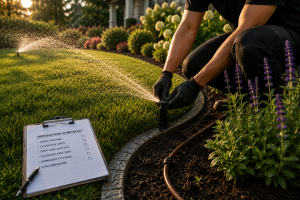
4. Assess Your Irrigation System Before Turning It Off
CRD water restrictions run through the end of September, but the end of summer is the time to assess your irrigation system while it is still running and any problems are easy to identify.
Walk your property with the system running zone by zone and look for heads that are misting instead of distributing a clean arc, coverage gaps where turf is consistently drier than surrounding areas, and drip lines in garden beds that may have shifted, clogged, or been damaged over summer. It is far easier to find and fix these issues while you still have weeks of active irrigation use ahead of you than to discover them during next spring’s startup.
Note the repairs needed and schedule them before you shut the system down for the season. Irrigation systems that go into winter with unresolved issues tend to present bigger problems in spring — what was a minor drip line blockage in September can become a cracked emitter or a damaged fitting after winter.
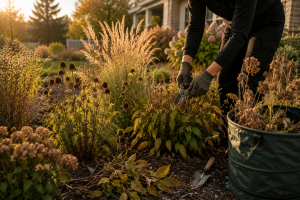
5. Cut Back Spent Perennials — But Not All of Them
August is the time to cut back perennials that have finished blooming and are looking ragged, but resist the urge to cut everything back at once. Some plants earn their place in a garden through fall and winter in ways that are easy to overlook in August.
Ornamental grasses should be left standing until late winter or early spring — they provide structure, movement, and visual interest through fall and winter, and their seed heads are valuable food sources for birds through the colder months. Echinacea and Rudbeckia seed heads serve the same purpose. Leave them standing until February and cut back in March just before new growth begins.
Plants that have genuinely finished and are showing disease or pest pressure should come out entirely rather than being cut back. Diseased material should go in the garbage, not the compost pile. For plants that are simply tired but healthy, a cut back to about one-third of their height is appropriate and keeps the garden looking tidy through September.
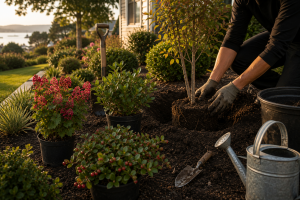
6. Plant Trees and Shrubs Now for the Best Establishment
September gets more attention as fall planting season, but August planting of trees and shrubs gives woody plants an extra month of warmth to get roots established before the rains arrive. Warm soil in August and September promotes rapid root growth even as air temperatures drop, and roots that develop before the first fall rains hit are significantly more established than those planted in October.
For Victoria properties, this is the ideal time to add new foundation shrubs, replace anything that struggled through summer, or establish new hedge lines before the busy fall season. Native species like Red-Flowering Currant, Salal, and Kinnikinnick handle fall planting particularly well and establish quickly in Victoria’s climate.
The one requirement for late summer planting is consistent watering through the establishment period. August-planted trees and shrubs need supplemental water until the fall rains take over, which in Victoria typically means watering through September and into October depending on the year.
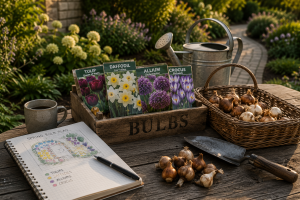
7. Start Thinking About Fall Bulb Orders
It feels too early, but August is when the best fall bulb selections disappear. Tulips, daffodils, alliums, and crocus all get planted in October and November in Victoria’s Zone 9b climate, but the varieties worth growing sell out at local suppliers well before then.
August is the time to decide what you want, where you want it, and to place your order so you are not left with the last available options in October. For commercial properties where spring colour is part of the overall landscape program, planning bulb quantities and placement in August makes the actual installation in fall straightforward rather than rushed.
Victoria’s mild winters mean bulbs establish beautifully here without the additional chilling requirements that colder Canadian climates create. Daffodils in particular naturalize exceptionally well across Greater Victoria and multiply in the ground over years, making them one of the best long-term investments in seasonal colour for any property.
August Is a Short Window — Make the Most of It
The shift from summer to fall happens quickly on Vancouver Island. The first fall rains typically arrive in October and the window for ideal overseeding, aeration, and planting closes faster than most people expect. The properties that look their best year after year are the ones where these August tasks get done on schedule, not when time allows.
If your commercial property or strata complex needs any of this work done before the season turns, IslandEarth Landscape Company is scheduling fall preparation visits across Greater Victoria now.
Contact us today to get on the schedule before August slips away.
📍 Serving Victoria, Saanich, Oak Bay, Langford, and surrounding communities
🌐 IslandEarth website
📞 (250) 474-1003