
If you only take one season seriously for your lawn, make it this one.
That sounds dramatic, but it’s just how lawns work in Victoria. The lawn you wake up to next May is almost entirely decided by what happens in September and October. The soil is still warm from summer, the first fall rains are coming, and cool-season grasses are waking back up after months of heat and drought stress. This is the window everything else builds from.
Most people think spring is lawn season. In Victoria’s Zone 9b climate, fall is where the real work happens. Here is exactly what to do right now.
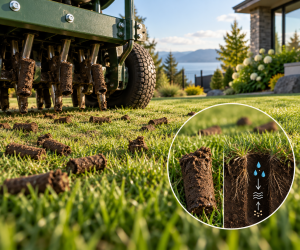
Let the Lawn Show You What It Needs First
Before you do anything, give the lawn a few days to tell you where it stands.
If you have had irrigation running through summer, turn it off and let things dry out slightly. If the lawn has been brown and dormant, wait for the first bit of rain to bring it back. Once the grass greens up, you can see what you are working with—thin spots, bare patches, areas that came back strong, and sections that clearly need help.
Many people jump straight to seeding without taking this step, then end up overseeding areas that didn’t need it while missing the spots that did. A week of observation before you start saves wasted seed and wasted time.
Aerate Before You Do Anything Else
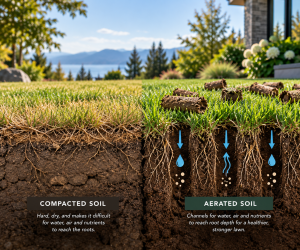
Victoria’s clay soils compact through a long dry summer of foot traffic and mowing. Before any seed or fertilizer goes down, core aeration opens the soil—pulling small plugs out of the lawn that create channels for water, air, and nutrients to reach root depth.
Without aeration, overseed lands on a hard, dry surface with poor contact, and fertilizer runs off rather than soaking in. With it, both work significantly better.
The plugs the aerator pulls out can stay on the surface. They break down on their own within a few weeks and return organic matter to the soil. You do not need to rake them up.
If you only aerate once a year, do it in September. Not spring.
Overseed Thin and Bare Areas
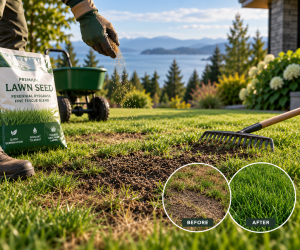
Once aerated, overseed any areas that are thin, patchy, or bare. September soil temperatures on Vancouver Island are still warm enough for rapid germination, and the returning fall rains take over the watering naturally, so you aren’t fighting to keep seed moist through a dry stretch.
For Victoria’s climate, a cool-season blend with perennial ryegrass and fine fescue works well. Ryegrass germinates quickly, which gives you visible results fast. Fescue is drought-tolerant and fills in well over time.
Spread seed at the rate on the package, and for bare patches, scratch up the surface lightly before seeding so the seed has some soil contact rather than just sitting on top of compacted ground. Keep seeded areas moist until germination—once the seedlings are up and the fall rains have settled in, they look after themselves.
Do not overseed areas with a thick chafer beetle grub infestation without treating first. Seeding into a damaged root zone will not hold.
Apply Fall Fertilizer
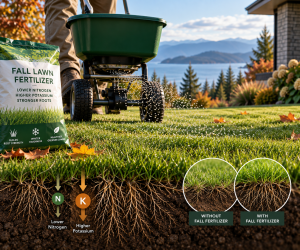
Lawns in Victoria benefit from a fall fertilizer application, and the timing matters. September is the window — early enough that the grass can use it before growth slows, but after the heat of summer has passed so you are not pushing soft growth it cannot sustain.
Choose a fertilizer with lower nitrogen and higher potassium for fall. Potassium builds root strength and helps the lawn handle the wet cold months ahead. High nitrogen in fall pushes lush top growth that is susceptible to fungal disease through winter. You want roots, not blades.
Heavy winter rains on the coast steadily leach nutrients and acidify soil over time, which is part of why moss gets the upper hand in Victoria lawns. A fall fertilizer application helps the grass go into winter well-nourished, not depleted.
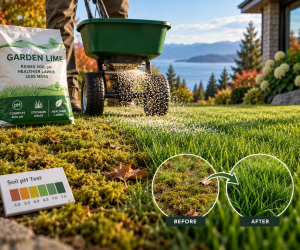
Apply Lime if Moss Has Been a Problem
If moss was present in your lawn this year, it will be back next year unless you address the soil conditions that let it win. Moss outcompetes grass in acidic soil, and Victoria’s wet winters steadily push soil pH down. Grass wants a pH around 6.0 to 7.0. Below that, it struggles, and moss moves in.
A fall lime application corrects the pH and shifts conditions back in grass’s favour before the wet season starts pushing it further down. Lime takes a few months to work through the soil, so applying it in September sets you up for better results next spring rather than waiting until you are already staring at a moss problem in April.
You can get a basic soil pH test at most local garden centres if you want to know exactly where your soil sits before applying.
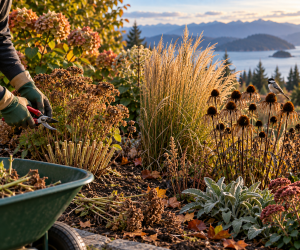
Cut Back Perennials — But Not All of Them
September is a good time to cut back perennials that have finished blooming and are looking ragged, but be selective about which ones you touch.
Ornamental grasses, echinacea seed heads, and rudbeckia should be left standing through fall and winter. They provide structure, visual interest, and food for birds through the colder months. Cut them back in late February just before new growth starts, not now.
Plants that are showing disease or significant pest pressure should come out cleanly and go in the garbage, not the compost. For everything else that has simply finished blooming and looks tired, cut it back to about one-third its height to keep things tidy without stripping the garden of its winter interest.

Plant Trees and Shrubs Now
September is one of the best months of the year to plant woody material on Vancouver Island. Warm soil drives rapid root establishment, and the fall rains arrive shortly after to take over irrigation. A tree or shrub planted in September has months of root development through fall and winter before it faces its first dry summer.
Native species like Red-Flowering Currant, Kinnikinnick, and Salal all establish quickly in Victoria’s fall conditions. If you have been thinking about adding a hedge, replacing a shrub that did not make it through summer, or adding new foundation plantings, do it now rather than waiting for spring.
The one thing you do need to do for September plantings is water them through until the rains take over consistently. A newly planted shrub in dry September soil still needs help until October.
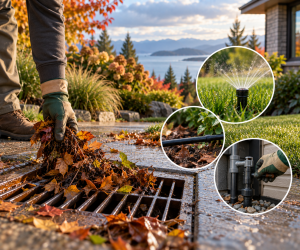
Clear Drains and Check Your Irrigation Before You Shut It Down
Before the fall rains arrive in earnest, clear any debris from surface drains and catch basins on the property. Leaves and organic material accumulate through summer and can block drainage when you need it most.
For irrigation, do a final walkthrough with the system running—check for heads that aren’t covering properly, drip lines that have shifted or clogged, and anything else that needs attention before you shut down for the season. Fixing small issues now is far easier than discovering them in spring.
Once consistent rain arrives and you no longer need irrigation, winterize the system before any risk of frost. In Victoria, that window is typically October, though it varies year to year.
September Does Not Wait
The fall establishment window on Vancouver Island is real, and it is short. By the time October is half over, soil temperatures are dropping, daylight is shrinking, and seed germination slows significantly. Everything on this list is easier and more effective done in September than in October, and the difference in results next spring is noticeable.
If your commercial property or strata complex needs fall lawn care this season, IslandEarth Landscape Company is scheduling fall visits across Greater Victoria now.
Contact us today to get on the schedule before September fills up.
📍 Serving Victoria, Saanich, Oak Bay, Langford, and surrounding communities
🌐 IslandEarth website
📞 (250) 474-1003